 THE MONACO GRAND PRIX LIBRARY BY ROY HULSBERGEN THE MONACO GRAND PRIX LIBRARY BY ROY HULSBERGEN |
|||||||||||||||||||||||||||
  |
Bruce McLaren |
by Pete Fenelon | |||||||||||||||||||||||||
|
Tweet |
|||||||||||||||||||||||||||
Born: 30/8/1937, Auckland, New Zealand CAREER
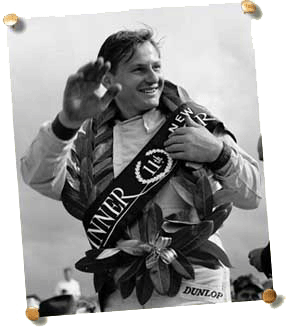
The parallel between the careers of Bruce McLaren and Jack Brabham are many; from the time the Australian discovered the Kiwi on the Tasman tour Bruce's career followed a strikingly similar path to Jack's, yet was to end prematurely in tragedy. Despite a lengthy recovery from Perthe's Disease, a child-hood illness which left him with a permanent limp, McLaren, the son of a garage proprietor who himself had competed successfully in national events, had built up a solid racing reputation in his home country before he won the NZ Driver To Europe award in 1958. Initially in the works F2 team at Cooper, Bruce soon found himself partnering Jack and Masten Gregory in an F2 car at the German Grand Prix; he came fifth. He provided able backup to Jack in 1960, closing the season by winning the United States Grand Prix (he remains the youngest-ever Grand Prix winner, at 22)... Bruce stayed with Cooper until 1962, but after the departure of Jack found himself increasingly cut out of the design process. The Cooper team was beginning its slide into oblivion, but Bruce managed to win their last GP of the 1.5 litre formula in 1962. In order to run in other categories as he pleased, he started his own small team, initially to build modified Coopers for the Tasman series, then branching out into sports cars; by the end of 1965 it was clear that he and Cooper had come to the end of their partnership and an F1 McLaren appeared in 1966. Meanwhile, Bruce was acquiring a reputation as a builder and tamer of some of the mightiest Can-Am sports cars yet seen. Denny Hulme joined him from Brabham and by 1968 the team was winning in F1 and so dominant in Can-Am that it became known as the "Bruce and Denny Show". They expanded rather tentatively into Indy car too for 1969; things were looking good for the 1970 season when the shocking news that Bruce had been killed testing a new Can-Am car at Goodwood rocked the racing community. |
Interview 1962 Monaco win |
||||||||||||||||||||||||||
|
|||||||||||||||||||||||||||
|
|
|||||||||||||||||||||||||||