 THE MONACO GRAND PRIX LIBRARY BY ROY HULSBERGEN THE MONACO GRAND PRIX LIBRARY BY ROY HULSBERGEN |
|||||||||||||||||||||||||||||||
  |
Dennis Hulme |
By Pete Fenelon | |||||||||||||||||||||||||||||
Born: (NZ) 18 June 1936, New Zealand GP's contested: 112 (1965 till 1974)
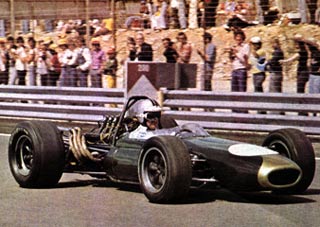
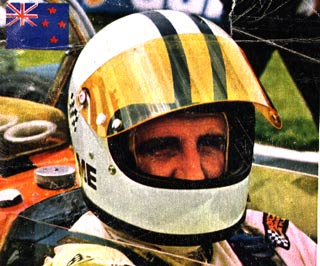
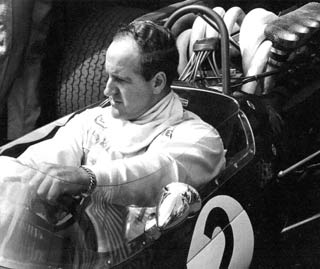
Denny Hulme's father Clive won the Victoria Cross for valour in World War Two, and a considerable fraction of the father's bravery and determination seemed to transfer itself to the son. After the usual array of local racing in various cars, Hulme and his friend George Lawton were chosen to be "Drivers to Europe" in 1960, in much the same way as Bruce McLaren had been previously. Lawton did not survive an accident, and Hulme was left to trail around the European scene -- initially F2 and also FJunior -- for several years. Joining Jack Brabham (ostensibly as a mechanic!) in 1963 proved to be the turning point of Denny's career. Jack promoted him to the works Junior team, in which Denny dominated the 1963 season. Denny provided able backup in Tasman and F2 racing, finally breaking through into the big time in 1965 when he ran a partial season in Formula 1 alongside Jack and Dan Gurney, performing unobtrusively and gathering a few points. With the departure of Dan Gurney to his own Eagle team, Denny found himself elevated to the status of Jack's full-time number two. The simple Brabham-Repcos were light, reliable and immediately quick, and after Jack's title in 1966 the next season turned out to be Denny's -- something the modest Hulme attributed largely to Brabham trying new ideas and parts on his own car first and affecting his reliability, though in fact Denny was by now truly a top driver. His first win came at Monaco, in the tragic race which claimed the life of Bandini; this was followed by a string of good points finishes and another win at the Nürburgring; enough to take the title from his teammate and the fast yet fragile Lotus 49s. Denny switched teams for 1968, moving to fellow-countryman Bruce McLaren's outfit. Although success was some time in coming in F1, the two soon became all-but unbeatable in the big Can-Am sports cars. Two GP wins at Monza and in Canada demonstrated that the team was heading in the right direction.1969 was another vintage Can-Am season, yet disappointing in F1, only one more win coming Denny's way. The new decade, however, brought with it the sternest challenges "The Bear" had ever faced. Testing the team's new Indycar, Denny's hands were badly burned in a methanol fire. There was the chance that he would lose several fingers; it was clear that he would at least be out of racing for a considerable spell. Then, just after the Indy 500 Denny had been obliged to miss, his friend and team-mate Bruce McLaren was killed testing a new Can-Am car. Hulme shared in the team's grief, and forced himself to race again -- both in F1, to little avail, and in Can-Am, where he put the heart back into the team by winning the championship again. |
|
||||||||||||||||||||||||||||||
|
|||||||||||||||||||||||||||||||